Home Sauna Buying Guide: How to Choose the Right Sauna for Your Home
Home Sauna Buying Guide: How to Choose the Right Sauna for Your Home
Buying a home sauna sounds simple until you start comparing them.
Traditional or infrared? Indoor or outdoor? Two-person or four-person? Barrel or cabin? Then come the questions about electricity, installation, space, heaters, materials, and price.
The best sauna for your home is not necessarily the most expensive one. It is the one that fits your space, the way you plan to use it, and the amount of setup and maintenance you are comfortable with.
This guide walks through the decisions worth making before you buy.
Start With Where the Sauna Will Go
Before comparing heaters or wood types, decide where you realistically want the sauna.
Indoor Saunas
An indoor sauna can work well in:
-
A home gym
-
Finished basement
-
Large bathroom
-
Spare room
-
Dedicated wellness room
-
Garage or climate-controlled space
Indoor placement keeps the sauna protected from weather and usually makes year-round access convenient.
The tradeoff is space. You will need enough room around the unit for safe installation, ventilation, electrical access, and entry.
Outdoor Saunas
Outdoor saunas work well for homeowners who have:
-
A patio
-
Pool area
-
Large backyard
-
Outdoor living space
-
Separate wellness area
Outdoor installations can create more of a destination or retreat feeling, especially when paired with a cold plunge, outdoor shower, or seating area.
Before choosing an outdoor model, pay close attention to manufacturer requirements for climate, foundation, weather exposure, roofing, and electrical connections.
Traditional Sauna vs. Infrared Sauna

This is usually the first major decision.
Traditional Saunas
Traditional saunas heat the air inside the room using a sauna heater.
Many buyers prefer them because they offer the classic sauna experience: higher room temperatures, traditional wood interiors, and the familiar feeling associated with a sauna room.
Traditional models are available in several designs, including indoor cabins and outdoor barrel saunas.
They can be a good choice if you want:
-
Classic sauna heat
-
Higher room temperatures
-
A more traditional sauna environment
-
Larger seating options
-
Indoor or outdoor installation choices
Infrared Saunas
Infrared saunas use infrared heating elements rather than relying primarily on very hot room air.
They are popular with homeowners who want a convenient indoor sauna and generally operate at lower ambient temperatures than traditional saunas.
They can be a good option if you want:
-
Indoor installation
-
Lower operating temperatures
-
Straightforward everyday use
-
Compact one- or two-person choices
-
Modern controls and features
Neither type is automatically better. The right choice depends on the experience you prefer and the requirements of your home.
Real Examples From the Summit Wellness Catalog
Looking at actual models makes the differences between sauna types much easier to understand.
Compact Traditional Sauna Example: Logan 1-Person
The Logan 1-Person Traditional Steam Sauna in Cedar is a good example of how a traditional sauna can work in a relatively small indoor space.
It measures approximately 4' 5½" wide × 3' deep × 6' 8" high and is designed for one person. Unlike many small infrared units, it still provides traditional steam-style heat using a 6kW Harvia electric heater. The Logan operates on 240V at 30 amps and can reach temperatures up to 195°F.
That makes the Logan useful for buyers who want the traditional high-heat sauna experience but do not have room for a larger family-sized cabin.
It also shows why electrical requirements need to be checked before purchase. A compact physical footprint does not necessarily mean a sauna can plug into a standard household outlet.
Larger Indoor Traditional Example: Charleston 4-Person
For buyers who want more room, the Charleston 4-Person Indoor Traditional Sauna takes a different approach.
Its footprint is approximately 75" long × 59" wide × 75" high, with double-tiered benches designed to seat four adults or give two people more room to stretch out. It uses a 6.0kW Harvia electric heater, reaches temperatures up to 170°F, and requires a 220V electrical supply.
The Charleston is constructed from Canadian Hemlock and is intended for indoor installation. Professional electrical installation is recommended, along with adequate ventilation.
What This Comparison Tells You
The Logan and Charleston both use traditional electric sauna heaters, but they solve very different space problems.
Choose a smaller model like the Logan when:
-
One-person use is typical.
-
Floor space is limited.
-
You still want traditional high-temperature sauna heat.
A larger model like the Charleston makes more sense when:
-
Two or more people will use the sauna regularly.
-
You want enough bench space to sit or lounge.
-
You have a dedicated room or larger wellness area.
The important point is that capacity alone does not tell the whole story. Compare the actual dimensions, bench arrangement, electrical requirements, and how you expect to use the sauna.
Traditional vs. Infrared: A Real Catalog Comparison
The electrical requirements can be dramatically different between traditional and infrared models.
The Dynamic Saunas Barcelona 1-to-2 Person FAR Infrared Sauna measures approximately 39" × 36" × 73" and weighs about 250 pounds. It uses six low-EMF FAR infrared carbon heating panels and has a maximum operating temperature of approximately 140°F.
One major practical difference is power.
The Barcelona runs on 120V and a dedicated 15-amp outlet, while the traditional Logan uses 240V at 30 amps.
That difference can matter as much as heat style when choosing a sauna.
The Barcelona may make more sense if:
-
You want a compact indoor sauna.
-
You prefer infrared heat.
-
You want a model that can use a dedicated 120V household outlet.
-
One or two people will typically use it.
-
You want features such as built-in speakers, LED lighting, and interior/exterior controls.
A traditional model may make more sense if:
-
You prefer hotter room temperatures.
-
You want traditional steam or wet/dry sauna use.
-
You are comfortable arranging a 220V or 240V electrical connection.
Neither setup is automatically better. The right choice depends on the experience you want and what your home can support.
Outdoor Sauna Example: SunSwell 4–6 Person
Outdoor installations introduce another set of considerations.
One outdoor traditional sauna in the Summit Wellness catalog is the SunSwell 4–6 Person Wooden Sauna. It measures approximately 85" × 72.8" × 91.7" and weighs about 880 pounds. It uses a 6kW heater with a 220V power supply.
It also includes:
-
8mm tempered glass
-
Full-view glass door and side windows
-
Waterproof and insulated roof tarp
-
Smart temperature and timer controls
-
Sauna stones for dry or steam-style use
This is a good example of why outdoor buyers need to think beyond the sauna itself.
An 880-pound unit needs a properly prepared, level location. Buyers also need to plan electrical service and enough clearance around the structure before delivery.
Electrical Requirements: Three Real Examples
Here is how different home sauna setups can be:
Barcelona Infrared Sauna
-
120V
-
Dedicated 15-amp outlet
-
Maximum temperature around 140°F
-
Indoor use
Logan Traditional Sauna
-
240V
-
30 amps
-
6kW Harvia heater
-
Maximum temperature up to 195°F
-
Indoor use
Charleston Traditional Sauna
-
220V electrical supply
-
6kW Harvia heater
-
Maximum temperature up to 170°F
-
Professional electrical installation recommended
This is why electrical requirements should be checked before ordering, not after the sauna arrives.
Size Matters More Than the Person Rating
A sauna labeled “two-person” or “four-person” tells you approximately how many people can sit inside, but it does not tell you how roomy it will feel.
For example, the Charleston is designed for four adults or two people lounging, while the Barcelona is rated for one to two people in a much smaller footprint.
Before buying, compare:
-
Exterior dimensions
-
Interior dimensions
-
Bench length
-
Number and height of benches
-
Door swing
-
Required clearance
-
Whether you want to sit upright or stretch out
If two people will regularly use the sauna and your space allows it, buying slightly larger than the minimum capacity can provide a more comfortable setup.
What We Recommend Checking Before Ordering
Based on the differences across the Summit Wellness catalog, these are the specifications worth checking on every sauna:
-
Exact exterior dimensions
-
Seating capacity and bench layout
-
Indoor or outdoor rating
-
Voltage and amperage
-
Heater size
-
Maximum operating temperature
-
Assembly requirements
-
Electrical installation requirements
-
Weight and delivery access
-
Wood/material type
-
Warranty
-
Shipping and return requirements
These details usually tell you more about whether a sauna is right for your home than a long list of lifestyle features.
Consider How Many People Will Actually Use It
Sauna capacity can be misleading if you only look at the number in the product name.
A “four-person” sauna may technically seat four adults, but that does not necessarily mean four people will find it spacious.
Ask yourself:
-
Will I usually use it alone?
-
Will my spouse or partner use it with me?
-
Will friends or family use it?
-
Do I want room to stretch out?
-
Would I rather have extra space than maximum efficiency?
If you have the room and budget, choosing slightly larger than your minimum requirement can make the sauna more comfortable over time.
A couple who expects to use the sauna together may prefer a three- or four-person model rather than the smallest two-person unit.
Check the Dimensions Before You Fall in Love With a Model
This sounds obvious, but it is one of the easiest mistakes to make when shopping online.
Look at:
-
Exterior width
-
Exterior depth
-
Overall height
-
Door clearance
-
Required clearance around the sauna
-
Ceiling height
-
Access route into the room or backyard
Then physically measure the area.
Painter's tape can be useful here. Mark the sauna's footprint on the floor so you can see how much space it will actually occupy.
For an outdoor sauna, also consider the walking area around it and how the doors will open.
Understand the Electrical Requirements
Do not assume every home sauna simply plugs into a standard wall outlet.
Electrical requirements vary considerably between models.
Some smaller infrared units may use a standard household connection, while larger traditional sauna heaters may require a dedicated higher-voltage circuit and professional electrical installation.
Before ordering, check the manufacturer's specifications for:
-
Voltage
-
Amperage
-
Dedicated circuit requirements
-
Plug type
-
Hardwiring requirements
-
Heater specifications
If you are unsure whether your home can support a particular model, show the electrical specifications to a licensed electrician before purchasing.
That small step can prevent an expensive surprise later.
Think About Installation Before Delivery Day
Some home saunas arrive as pre-built panels designed to be assembled on site. Others require more involved installation.
Before choosing a model, find out:
-
How the sauna is delivered
-
How large the shipping packages are
-
Whether curbside or threshold delivery is provided
-
How many people are needed for assembly
-
Whether professional installation is recommended
-
Whether electrical work is required
-
What type of floor or foundation is needed
For outdoor saunas, you may also need to prepare a level base before delivery.
The sauna itself should not be the first thing to arrive at an unfinished installation site.
Barrel Sauna or Cabin Sauna?

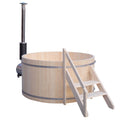
Barrel saunas are popular because of their distinctive appearance and relatively compact outdoor footprint.
Their rounded shape also creates a different interior layout than a traditional rectangular cabin.
A barrel sauna may be worth considering if:
-
You want an outdoor sauna
-
Appearance matters
-
You like the traditional barrel design
-
Your outdoor space is limited
A cabin-style sauna may be better if:
-
You prefer conventional walls and ceilings
-
Interior headroom matters
-
You want more flexible bench arrangements
-
You are installing indoors
Neither style is universally better. Look at the usable interior space rather than choosing only by appearance.
Pay Attention to Materials
Wood is a major part of the sauna experience, but buyers can become overly focused on one particular species.
Different manufacturers use woods such as cedar, hemlock, spruce, and other sauna-appropriate materials.
Instead of looking only at the wood name, consider:
-
Construction quality
-
Interior finish
-
Bench construction
-
Door quality
-
Hardware
-
Exterior weather protection for outdoor models
-
Manufacturer care instructions
For outdoor saunas, proper maintenance is especially important.
Decide Which Features Actually Matter to You
Modern saunas can include a long list of features.
Depending on the model, you may see:
-
Interior lighting
-
Chromotherapy lighting
-
Bluetooth audio
-
Digital controls
-
Wi-Fi controls
-
Glass doors
-
Adjustable vents
-
Ergonomic backrests
-
Different bench configurations
Features are useful when you will actually use them.
Do not allow a long feature list to distract you from the basics: appropriate size, quality construction, suitable heating, proper electrical requirements, and a good fit for your space.
How Much Should You Spend on a Home Sauna?
Home sauna prices vary widely.
The final price can depend on:
-
Sauna type
-
Size
-
Construction materials
-
Heater
-
Indoor vs. outdoor design
-
Included features
-
Brand
-
Shipping
-
Installation requirements
A lower purchase price does not necessarily mean a lower total project cost.
For example, electrical work, site preparation, assembly, or outdoor foundation work may need to be added to your budget.
When comparing models, look at the total setup rather than the sauna price alone.
Do Not Ignore Shipping and Returns
A sauna is very different from returning a small online purchase.
Before ordering, understand:
-
Shipping charges
-
Delivery method
-
Delivery area
-
Inspection requirements
-
Damage-reporting deadlines
-
Return window
-
Restocking fees
-
Return freight responsibility
-
Manufacturer warranty
Read these policies before buying, not after the truck arrives.
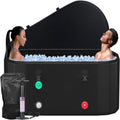
What About a Cold Plunge?

If you are planning a complete home wellness space, it may make sense to consider the sauna and cold plunge together.
Think about:
-
Available space
-
Drainage
-
Water access
-
Electrical requirements
-
Indoor vs. outdoor placement
-
Chiller requirements
-
Maintenance access
Planning both pieces at the same time can create a cleaner layout even if you purchase them separately.
Questions to Ask Before Buying
Before placing an order, you should be able to answer these questions:
-
Will the sauna fit comfortably in my intended space?
-
Is it approved for indoor or outdoor use where I plan to install it?
-
What electrical service does it require?
-
Who will assemble it?
-
Does the installation area need preparation?
-
How many people do I realistically want it to hold?
-
Do I prefer traditional or infrared heat?
-
What is included with the sauna?
-
How will it be delivered?
-
What are the return and warranty terms?
If you cannot answer one of those questions, find the answer before ordering.
Choosing the Right Sauna for Your Home
The best approach is to narrow the decision in this order:
Location → sauna type → size → electrical requirements → installation → features → price
That prevents you from choosing a beautiful sauna first and discovering later that it is wrong for your home.
A home sauna should fit naturally into your space and routine. When those practical details are right, choosing between models becomes much easier.
Explore Your Options
Summit Wellness Saunas offers traditional, infrared, and barrel sauna options for a range of indoor and outdoor home wellness spaces.
Explore the collections below to compare the styles and features that best fit your home.
Traditional Saunas
For homeowners looking for the classic sauna experience.
Infrared Saunas
For convenient indoor sauna use with infrared heating technology.
Barrel Saunas
For distinctive outdoor sauna installations and backyard wellness spaces.
Cold Plunges
For homeowners planning a complete hot-and-cold wellness setup.